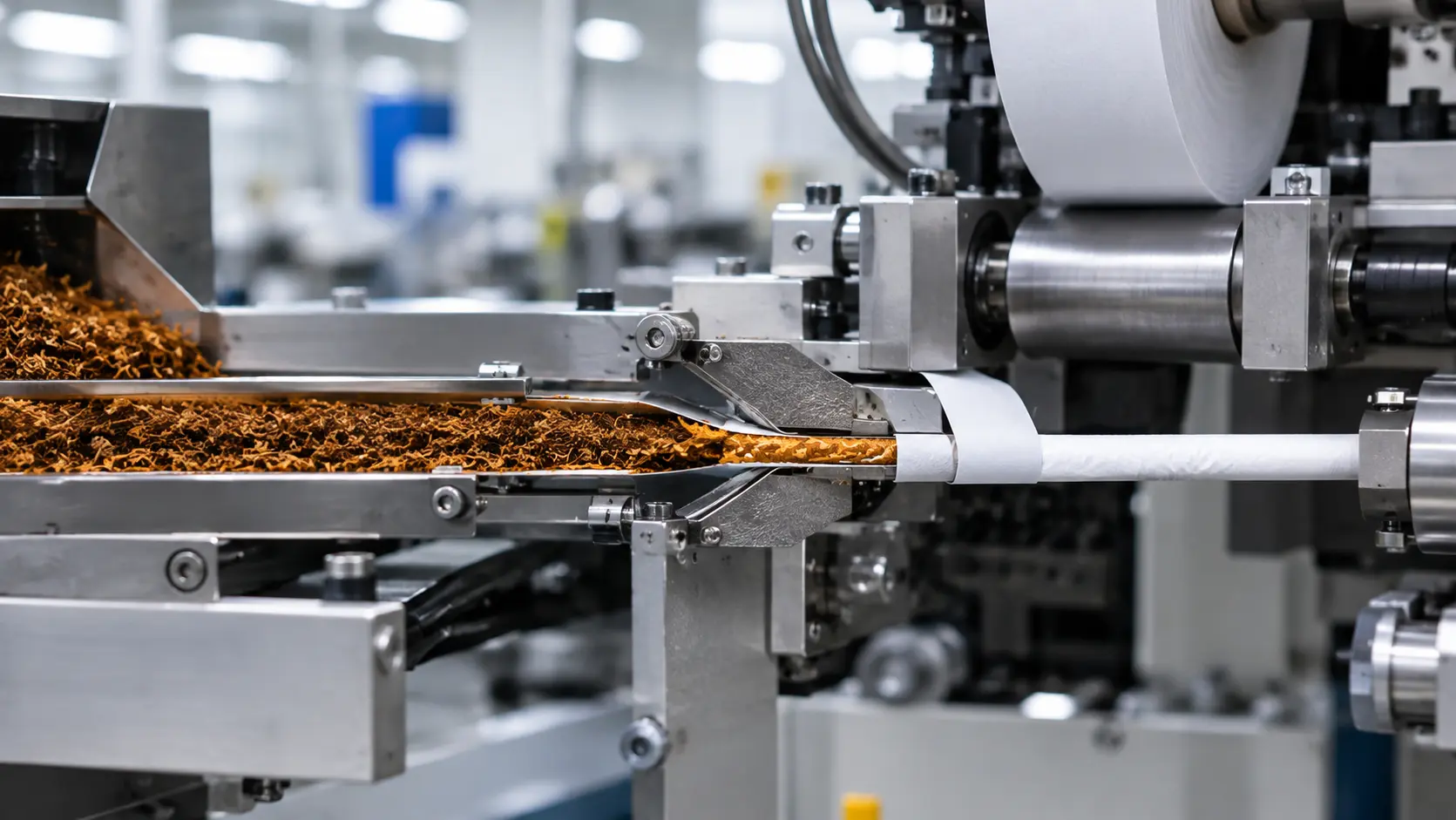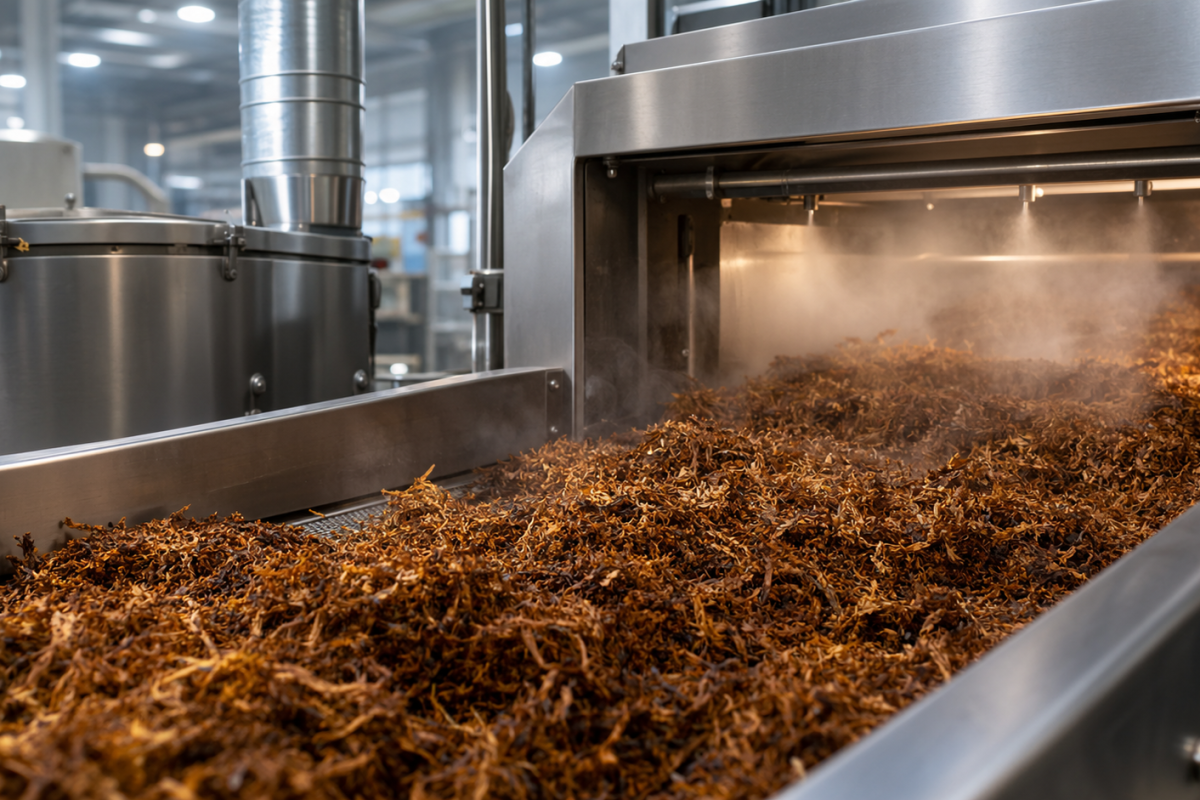
Cigarette manufacturing targets a tobacco moisture content of roughly 12% to 14%, maintained through conditioning and controlled production floor humidity. This single variable affects rod integrity, burn characteristics, and finished smoking quality more than almost any other factor in production, and it’s one of the least visible, most consistently monitored parts of the entire manufacturing process.
What “Moisture Content” Actually Means in Tobacco Processing
Moisture content isn’t a loose description of how dry or damp tobacco feels, it’s a measured, controlled percentage of water relative to the tobacco’s total weight, tracked and adjusted at multiple stages of production. Tobacco is a naturally hygroscopic material, it absorbs moisture from humid air and loses it to dry air, continuously moving toward what’s called its equilibrium moisture content, the level it settles at when exposed to a given relative humidity and temperature for long enough. This is why moisture control isn’t a one-time adjustment, it’s an ongoing balance maintained against the surrounding air throughout storage, conveying, rod making and packing.
The Target Range: Why 12% to 14%
Across processing literature, cut tobacco is consistently conditioned to a target moisture content in the 12% to 14% range before it’s made into cigarettes. This isn’t an arbitrary middle ground, published research testing cigarettes made from tobacco equilibrated at different humidity levels found that smoking quality was rated highest in cigarettes with moisture content between 12% and 14%, and rated measurably lower at both ends, roughly 8% to 9% moisture at the dry end, and nearly 19% at the wet end. In other words, this range isn’t just a manufacturing convenience, it’s the band where the finished product actually performs best.
What Goes Wrong Outside the Target Range
Too dry. When tobacco moisture drops below target, roughly into the 10% to 11% range and lower, the leaf becomes brittle. Brittle tobacco breaks apart more easily during handling and rod forming, which shows up downstream as rod weight variation outside tolerance and a higher rate of filter attachment failures. One documented case tracked a conditioning system drifting from a 13% target down to 11.2%, which was enough on its own to push an entire multi-hour production run outside specification.
Too wet. At the other end, excess moisture causes tobacco to clump rather than flow and distribute evenly during the rod-forming stage covered in rod formation. Clumping leads to uneven density along the rod, inconsistent packing behavior, and measurable changes in flavor and smoke composition, research shows both gas-phase and particulate moisture in the smoke itself rise as cut tobacco moisture increases.
Both directions point to the same conclusion: the target range isn’t a suggestion, it’s the operating window that keeps the rest of the manufacturing process working correctly.
How Moisture Is Controlled During Production
Tobacco is brought to its target moisture through a conditioning process, sometimes called reordering, before it enters rod making. This is typically done in stages: tobacco is exposed to higher-humidity air to add the bulk of the needed moisture relatively quickly, then a lower-humidity air stage adds the final percentage points more gradually, since adding moisture too aggressively at the end can cause uneven absorption.
Getting the tobacco to the right moisture once isn’t enough on its own. Production floor relative humidity, commonly maintained around 60% to 65%, has to stay controlled throughout storage, conveying, rod making and packing, because tobacco continues equilibrating with the surrounding air at every one of those stages. A conditioning system that drifts even slightly, or a storage area outside that humidity range, can pull tobacco moisture away from target well after the initial conditioning step is complete.
Why This Matters More at Scale
A moisture control issue rarely shows up as a single bad cigarette. Because rod-making machines run continuously at thousands of cigarettes per minute, a conditioning drift that goes uncaught can affect an entire production run before it’s identified, not just a handful of units. This is part of why moisture control sits alongside rod formation consistency as one of the quieter, less visible factors that actually determines whether a large order performs the same from the first carton to the last, not just in the approved sample batch.
Why Moisture Control Matters for Private Label Brands
For a brand approving a sample before committing to a full production run, moisture control is part of what stands behind that approval holding up at scale. It’s not a spec a brand owner typically asks about directly, but it’s one of the underlying reasons a private label or contract manufacturing order should taste, draw and burn consistently across the full order, not just match the sample that was approved before production started.
Frequently Asked Questions
What is the ideal tobacco moisture content for cigarette manufacturing?
Roughly 12% to 14%, the range research has shown correlates with the highest-rated smoking quality, balancing handling durability against flavor and burn consistency.
How does humidity affect cigarette quality?
Both tobacco moisture content and production floor relative humidity affect it. Tobacco continuously equilibrates with the surrounding air, so if floor humidity drifts outside the target range, roughly 60% to 65%, tobacco moisture can drift with it, even after initial conditioning.
Does moisture content affect flavor?
Yes. Research shows both the moisture content and volatile compound composition of cigarette smoke change measurably with cut tobacco moisture, which is part of why the target range affects smoking quality, not just handling durability.
What happens if tobacco is too dry during processing?
It becomes brittle, leading to breakage, tobacco rod weight variation outside tolerance, and a higher rate of filter attachment failures downstream.
How is moisture maintained during large production runs?
Through a staged conditioning process before rod making, combined with continuous production floor humidity control throughout storage, conveying, rod making and packing, since tobacco keeps equilibrating with the surrounding air at every stage.