Every cigarette starts with a blend. The specific combination of tobacco leaf types used in a cigarette determines everything about how it smokes, the flavor, the strength, the aroma, the burn rate and the overall character of the finished product. Two cigarettes can look identical on the outside and smoke completely differently because of what is inside them.
Tobacco blending is one of the most technically skilled and commercially significant aspects of cigarette manufacturing. It is the stage where raw leaf becomes a consistent, repeatable product, and it is the stage where the character of a cigarette brand is fundamentally defined.
This guide explains what tobacco blending is, how it works, what the main tobacco types are and how the differences between Virginia, American, Burley and Special blends translate into the finished cigarette products that reach international markets. It is written from 35 years of direct cigarette manufacturing experience at General Tobacco, a cigarette manufacturer based in Pakistan’s Karachi Export Processing Zone.
What is Tobacco Blending
Tobacco blending is the process of combining two or more different tobacco leaf types in specific, carefully calculated proportions to produce a tobacco mixture with consistent, defined characteristics.
Very few commercially manufactured cigarettes are made from a single tobacco type. Single-leaf cigarettes are difficult to produce consistently because the natural characteristics of tobacco leaf vary significantly between growing regions, growing seasons and individual leaf grades. A crop of Virginia tobacco from Zimbabwe in one year will not taste exactly like a crop from the same farm the following year, growing conditions, rainfall, soil composition and curing conditions all affect the final character of the leaf.
Blending solves this consistency problem. By combining multiple tobacco types from multiple sources in precisely calculated proportions, a blender can produce a mixture that delivers a consistent flavor profile and smoking experience across multiple production batches, even when the individual leaf components vary slightly between seasons.
This is why the largest and most recognized cigarette brands in the world taste the same regardless of where or when you smoke them. The brand’s blend recipe, the specific combination of leaf types and proportions that defines its character, is one of its most carefully protected commercial assets.
Where Tobacco Leaf Comes From
Before covering the main blend types it is worth understanding where the raw leaf comes from, because the growing region and curing method used on tobacco leaf are what determine its characteristics and therefore its role in a blend.
Major Tobacco Growing Regions
Brazil
Brazil is one of the world’s largest tobacco producers and the dominant supplier of flue-cured Virginia tobacco used in international cigarette manufacturing. Brazilian Virginia leaf is known for its consistent quality, high sugar content and reliable supply volumes.
Zimbabwe
Zimbabwe produces some of the most highly regarded flue-cured Virginia tobacco in the world. Zimbabwean leaf is prized for its flavor complexity and is used in premium cigarette blends globally.
USA
The United States is a major producer of both flue-cured Virginia tobacco and air-cured Burley tobacco. American leaf is used extensively in American blend cigarettes and is the historical origin of the American blend style.
Malawi
Malawi is a significant producer of both flue-cured and air-cured tobacco, particularly Burley. Malawian Burley is widely used in American blend cigarettes produced for international markets.
Turkey and Greece
Turkey and Greece are the primary producers of Oriental tobacco, a sun-cured variety with a distinctive aromatic character that adds complexity to American blend cigarettes.
China
China is the world’s largest tobacco producer by volume and produces significant quantities of flue-cured Virginia tobacco used in both domestic and international cigarette manufacturing.
India
India produces both flue-cured Virginia and air-cured tobacco types and is a significant supplier to international cigarette manufacturers.
Pakistan
Pakistan produces tobacco leaf primarily in Khyber Pakhtunkhwa province. Pakistani tobacco is used in domestic cigarette manufacturing and forms a component of some locally blended cigarette products.
The Main Tobacco Leaf Types Used in Cigarette Manufacturing
There are several distinct tobacco leaf types used in commercial cigarette manufacturing, each produced using a different curing method and each with different flavor, strength and burn characteristics.
Flue-Cured Virginia Tobacco
Flue-cured Virginia tobacco is the most widely used tobacco type in international cigarette manufacturing. It is produced by hanging harvested tobacco leaf in a curing barn where heated air, historically produced by flues running from a furnace, is circulated to dry the leaf rapidly over several days.
The flue-curing process locks in the natural sugars present in the fresh tobacco leaf, giving flue-cured Virginia its characteristic light, naturally sweet flavor. Flue-cured Virginia burns evenly and cleanly, making it the structural foundation of most international cigarette blends.
Characteristics of flue-cured Virginia:
- Light to medium body
- Naturally sweet flavor with citrus notes
- High sugar content
- Even, consistent burn
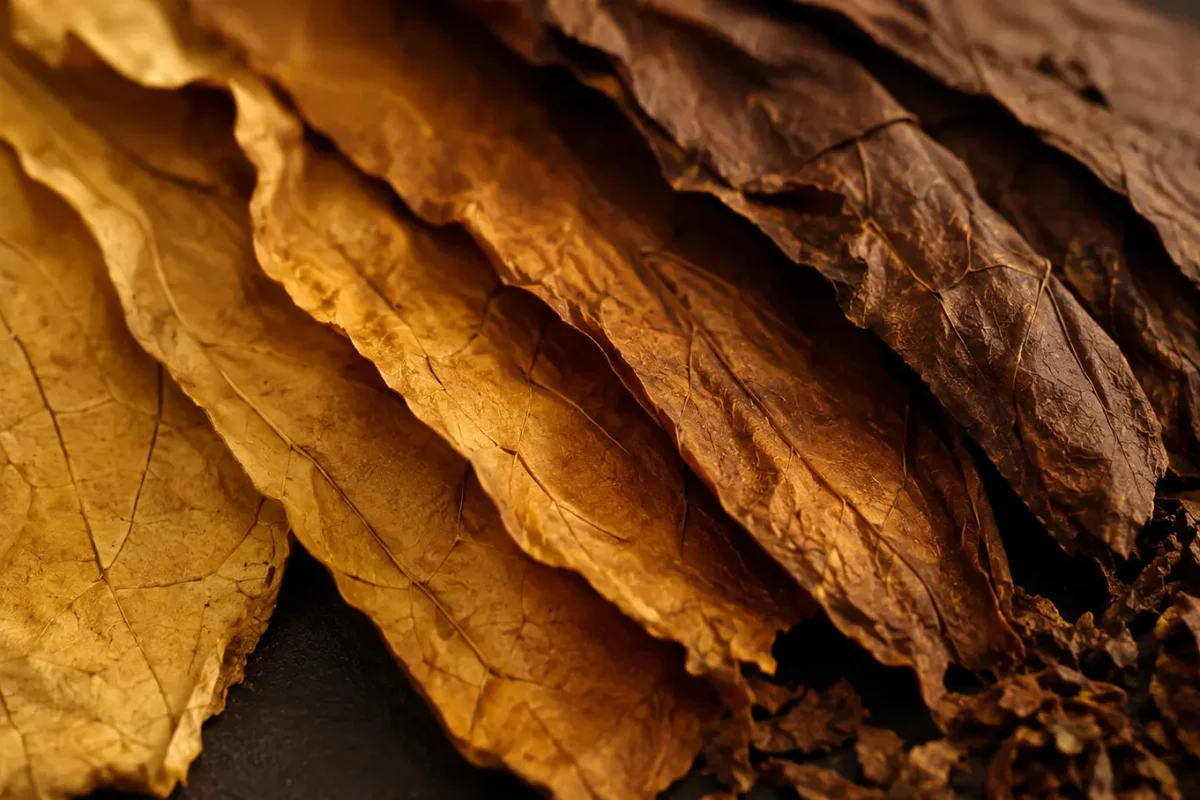
- Pale yellow to orange leaf color after curing
- Relatively low nicotine content compared to Burley
Role in blending:
Virginia tobacco forms the base of almost every major cigarette blend style. In Virginia blend cigarettes it is the primary or sole component. In American blend cigarettes it typically forms 50 to 60% of the total blend by weight.
Air-Cured Burley Tobacco
Burley tobacco is produced by hanging harvested leaf in a ventilated barn where it is allowed to air-dry naturally over several weeks without the application of heat. This air-curing process draws most of the natural sugars out of the leaf, producing a tobacco with a dry, full-bodied character quite different from flue-cured Virginia.
Characteristics of air-cured Burley:
- Medium to full body
- Dry, slightly bitter flavor with cocoa and nut notes
- Low sugar content
- High nicotine content relative to Virginia
- High capacity to absorb added flavorings and casings
- Brown to dark brown leaf color after curing
Role in blending:
Burley tobacco serves two important functions in cigarette blending. First, it adds body and strength to American blend cigarettes, counterbalancing the natural sweetness of Virginia. Second, its high absorbency makes it the primary carrier for added flavorings and casings in flavored cigarette blends. Burley typically forms 20 to 30% of an American blend by weight.
Oriental Tobacco
Oriental tobacco, also known as Turkish tobacco, is produced by sun-curing harvested leaf in open fields. It is a small-leafed variety grown primarily in Turkey, Greece, Bulgaria and North Macedonia. The sun-curing process and the unique growing conditions of the Eastern Mediterranean region give Oriental tobacco a distinctive aromatic, slightly spicy character unlike any other tobacco type.
Characteristics of Oriental tobacco:
- Light body
- Aromatic, spicy, floral flavor notes
- Low nicotine content
- High resin content giving strong aromatic properties
- Small leaf size
- Used in relatively small proportions in blends
Role in blending:
Oriental tobacco is used in smaller proportions than Virginia or Burley, typically 5 to 15% of an American blend by weight. Its primary role is to add aroma complexity and a distinctive character that differentiates American blend cigarettes from pure Virginia products. Oriental tobacco gives American blend cigarettes their characteristic aroma during smoking.
Reconstituted Tobacco Leaf
Reconstituted tobacco leaf, often abbreviated as RTL or recon, is not a natural leaf type but a processed tobacco material produced from tobacco manufacturing by-products. Stems, dust and trim that would otherwise be waste material from tobacco processing are collected, processed with water and binding agents into a slurry and then formed into a uniform sheet that is dried and cut into usable tobacco strips.
Characteristics of reconstituted tobacco:
- Consistent composition between batches
- Lower cost than natural leaf
- Used to improve consistency and reduce material waste
- Burns evenly due to uniform composition
- Neutral to slightly flat flavor compared to natural leaf
Role in blending:
Reconstituted tobacco is used in varying proportions in most commercially manufactured cigarettes worldwide. It improves blend consistency, reduces manufacturing costs and allows manufacturers to make use of leaf material that would otherwise be discarded. The proportion of reconstituted tobacco in a blend is one of the factors that differentiates premium and economy cigarette products.
The Main Cigarette Blend Types
The combination of tobacco leaf types used in a cigarette defines its blend style. There are four main blend styles used in international cigarette manufacturing.
Virginia Blend
A Virginia blend cigarette uses flue-cured Virginia tobacco as its primary or sole component, with minimal or no Burley or Oriental tobacco included.
Flavor profile:
Virginia blend cigarettes have a light, naturally sweet flavor with a clean, smooth smoke. The absence of Burley gives Virginia blend cigarettes a gentler, more delicate character than American blend. The natural sugars in the Virginia leaf caramelize during smoking, producing a slightly sweet aroma.
Strength:
Virginia blend cigarettes are typically lighter in strength than American blend because Virginia tobacco has lower nicotine content than Burley.
Where Virginia blend is used:
Virginia blend is particularly common in UK and Commonwealth market cigarettes, where the lighter, cleaner flavor profile has historically been preferred over the fuller American blend style. It is also common in value and economy cigarette segments in many markets where the simpler blend composition reduces manufacturing cost.
Who it suits:
Smokers who prefer a lighter, cleaner smoking experience. Markets where a more delicate flavor profile is commercially preferred.
American Blend
American blend is the dominant cigarette blend style globally and the foundation of most internationally recognized cigarette brands. It combines three distinct tobacco types in specific proportions, flue-cured Virginia, air-cured Burley and Oriental tobacco, producing a flavor profile that is more complex and full-bodied than Virginia blend alone.
Typical American blend composition:
Virginia tobacco: 50 to 60% by weight
Burley tobacco: 20 to 30% by weight
Oriental tobacco: 5 to 15% by weight
Reconstituted tobacco: variable proportion
Flavor profile:
American blend cigarettes have a rounded, full-bodied flavor with a balance of the natural sweetness from Virginia, the dry body from Burley and the aromatic complexity from Oriental. Added casings and top flavorings applied to the Burley component enhance and define the specific character of individual American blend brands.
Strength:
American blend cigarettes are typically medium strength: stronger than Virginia blend because of the Burley component but balanced by the lighter Virginia base.
Where American blend is used:
American blend is the dominant style in USA, most of Continental Europe, Middle East, Africa and Asia. The majority of the world’s most widely sold cigarette brands are American blend products. For brand owners targeting international markets, American blend is typically the safest commercial choice because of its universal consumer familiarity.
Who it suits:
Brand owners targeting mainstream consumer segments in international markets. American blend is the most commercially versatile blend style available.
Burley Blend
A Burley blend cigarette uses air-cured Burley tobacco as its primary component, with Virginia typically used in a supporting role rather than as the dominant leaf type. Pure Burley blends are less common in international markets than American blend or Virginia blend but are produced for specific regional markets.
Flavor profile:
Burley blend cigarettes have a heavier, more full-bodied character than American or Virginia blend. The naturally dry, slightly bitter character of Burley dominates the flavor profile, producing a stronger, more robust smoking experience.
Strength:
Burley blend cigarettes are typically the strongest of the main blend styles due to Burley’s high nicotine content.
Where Burley blend is used:
Burley-dominant blends are more common in specific regional markets where consumer preference leans toward a stronger, more full-bodied product. They are also used in pipe tobacco and some specialty cigarette products.
Special Blend
Special blend is a manufacturer-defined blend formulation that does not conform to a standard internationally recognized style. It combines tobacco leaf types in proportions specific to that manufacturer’s proprietary recipe.
At General Tobacco our Special Blend is a proprietary formulation developed over decades of manufacturing experience. It combines selected tobacco leaf types in proportions refined through years of production to deliver a consistent, balanced smoking experience specifically developed for the international markets we serve.
Premium Special Blend:
Our Premium Special Blend uses higher grade leaf selections within the same proprietary formulation, producing a more refined flavor and a smoother smoking experience compared to the standard Special Blend. Premium Special Blend is used in our Royal Limited Edition and Royal Red product lines.
Why Special Blend matters for brand owners:
For private label manufacturing clients, the blend used in their product is our existing Special Blend or American Blend, an already proven, consistently produced formulation. This means there is no blend development time required before production can begin. The blend is already producing commercial cigarettes and delivering consistent results across our international export markets.
For OEM manufacturing clients who want to specify their own blend, understanding the differences between these blend styles is the starting point for defining what goes into your proprietary recipe.
How the Tobacco Blending Process Works
Understanding the blend styles is one thing. Understanding how a blend is actually produced in a manufacturing facility is the next step.
Leaf Selection and Grading
The blending process begins with leaf selection. Tobacco leaf is graded by quality, leaf position on the plant, growing region and curing quality. Different grades of the same leaf type have different flavor intensities and burning characteristics, and the specific grades selected for a blend affect its final character as much as the proportions used.
Blend Recipe Development
A blend recipe specifies the exact leaf types, grades and proportions that make up a specific blend. For a commercial cigarette brand this recipe is typically developed through a series of small-scale test blends evaluated by experienced blenders before being scaled up to full commercial production.
Casing Application
Before blending, Burley tobacco typically goes through a casing process where a water-based solution of sugars, humectants and flavor compounds is applied to the leaf to enhance its natural characteristics and improve its burning properties. Casing ingredients vary between manufacturers and are one of the proprietary elements that differentiate individual brands within the American blend style.
Cutting
Each tobacco leaf type is cut to the required cut width before blending. Cut width affects draw resistance and burn rate, finer cuts burn faster, coarser cuts burn slower. Standard cigarette tobacco cut widths range from 0.8mm to 1.2mm depending on the product specification.
Blending and Mixing
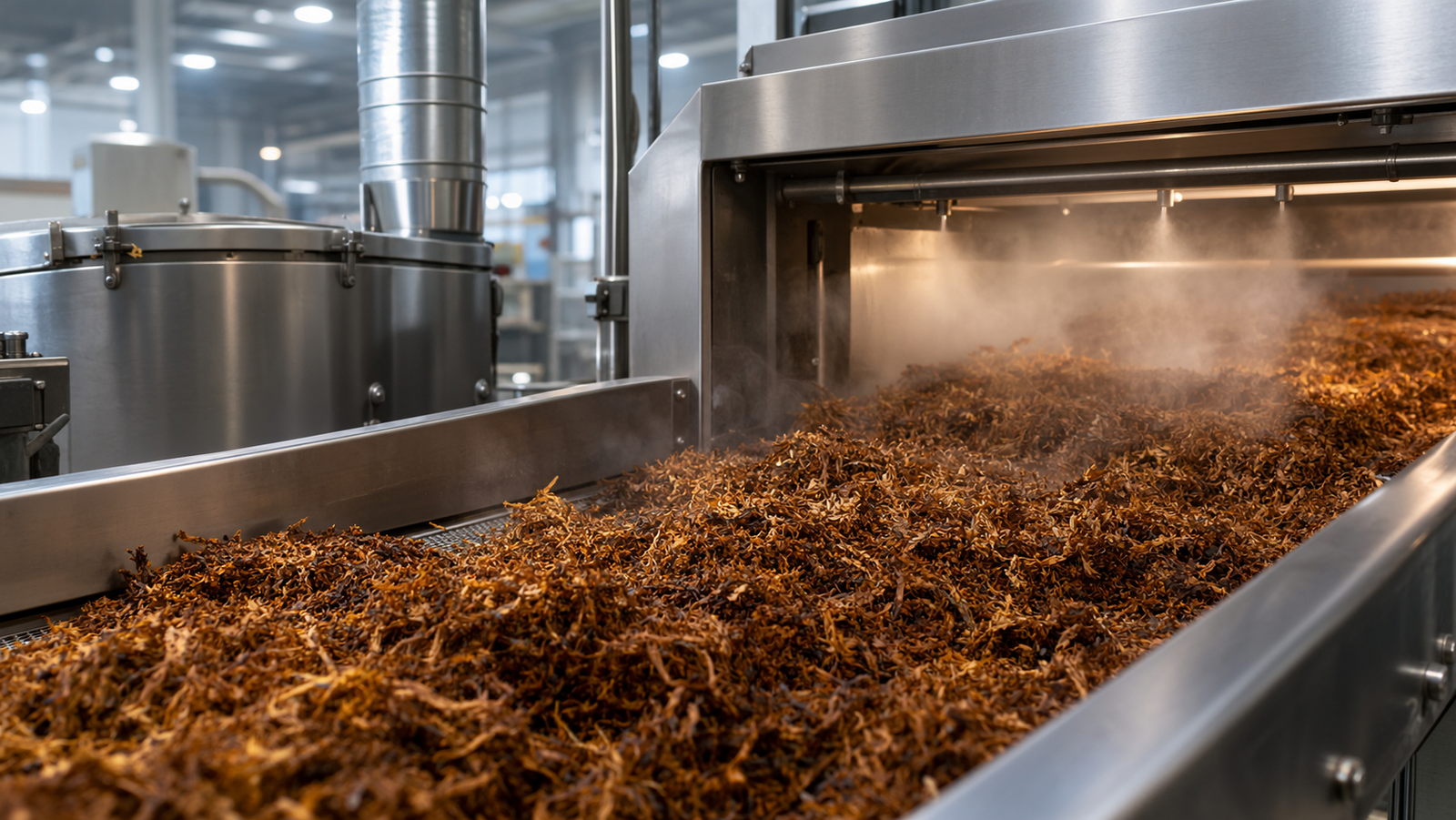
The cut tobacco components are combined in the specified proportions in a blending drum, a large rotating cylinder that thoroughly mixes the different leaf types to produce a uniform, consistent blend. The blending drum ensures that every kilogram of finished blend has the same composition as every other kilogram, which is what delivers the smoking consistency that makes a commercial cigarette brand repeatable across millions of units.
Top Flavoring Application
After blending, a top flavoring, a concentrated mixture of aromatic flavor compounds, may be applied to the finished blend to add specific aroma characteristics. Top flavorings are applied in very small quantities and are typically volatile enough to be noticed as the cigarette burns rather than in the taste of the smoke itself. The specific top flavoring used in a blend is one of the most commercially sensitive and closely guarded elements of any cigarette brand recipe.
Moisture Conditioning
The finished blend is conditioned to the precise moisture content required for the cigarette making machine. Tobacco that is too dry crumbles during production. Tobacco that is too moist does not cut cleanly and may develop mold during storage. Commercial cigarette tobacco is typically conditioned to a moisture content of 12 to 14% before being fed into the cigarette making machine.
How Blend Choice Affects Your Cigarette Brand
For brand owners planning to launch a cigarette brand, understanding blend types is directly relevant to two key decisions.
Which Blend is Right for Your Target Market
Different markets have different consumer preferences that have developed over decades of commercial cigarette history.
Middle East
American blend dominates across most Middle Eastern markets. Consumers in GCC countries are familiar with American blend products from internationally recognized brands and expect a full-bodied, rounded flavor profile. Virginia blend products typically perform less well in Middle Eastern markets without significant marketing investment to shift consumer expectations.
Africa
Both Virginia blend and American blend are commercially viable in African markets depending on the specific country and market segment. Value-positioned Virginia blend products compete effectively in price-sensitive African market segments. American blend products command a premium positioning in most African markets.
Europe
Virginia blend has a strong historical presence in UK and Commonwealth-influenced markets. American blend dominates in Continental European markets. Super Slim formats in European markets often use a lighter Virginia or American blend to match the lighter product positioning of the slim format.
Asia
American blend dominates mainstream consumer segments across most of South and Southeast Asia. Local blend preferences vary significantly by country and market research into specific target country preferences is recommended before finalizing blend selection for Asian market entry.
USA
American blend is the defining style of the US cigarette market, virtually all commercially significant US cigarette brands are American blend products. Entering the US market with a Virginia or Burley blend product would require significant consumer education investment.
Private Label vs OEM: How Blend Choice Affects Your Manufacturing Decision
The relationship between blend choice and manufacturing arrangement is one of the most practical reasons for brand owners to understand blend types before contacting a manufacturer.
If you are comfortable using an existing, proven blend from your manufacturer, which is what private label manufacturing involves, you can move directly to production without any blend development time. The blend is already producing consistent commercial cigarettes. Your brand name goes on the pack and production begins.
If you have a specific blend requirement that is different from what your manufacturer already produces, either a proprietary recipe you have developed or a specific leaf type combination you need, then OEM manufacturing is the appropriate route. OEM requires more lead time because blend testing and sample approval need to happen before full production can begin, but it gives you complete control over what goes into your product.
Most first-time brand owners launching into a new market start with private label using an existing American or Special blend, test their market, build distribution and establish sales, and then consider moving to a proprietary OEM blend once they have real market data informing what their consumers actually want.
Frequently Asked Questions
What is the most popular cigarette blend in international markets?
American blend is the most widely consumed cigarette blend style in the world. It combines flue-cured Virginia, air-cured Burley and Oriental tobacco in specific proportions to produce a rounded, full-bodied flavor that has become the global commercial standard. The majority of the world’s most widely sold cigarette brands are American blend products.
What is the difference between Virginia blend and American blend cigarettes?
Virginia blend cigarettes use flue-cured Virginia tobacco as their primary or sole component, producing a lighter, naturally sweet flavor. American blend cigarettes combine Virginia tobacco with Burley and Oriental tobacco types, producing a fuller, more rounded flavor with greater complexity. American blend is stronger and more full-bodied than Virginia blend.
What does flue-cured mean in tobacco?
Flue-cured refers to a tobacco curing method where harvested leaf is dried in a curing barn using heated air circulated from a furnace through flues. The rapid heat drying process locks in the natural sugars present in the fresh tobacco leaf, giving flue-cured tobacco its characteristic light, sweet flavor. Virginia tobacco is the primary flue-cured tobacco type used in commercial cigarette manufacturing.
What is Oriental tobacco and where does it come from?
Oriental tobacco is a sun-cured, small-leafed tobacco variety grown primarily in Turkey, Greece and Bulgaria. It is characterized by a distinctive aromatic, slightly spicy flavor that adds complexity to American blend cigarettes. Oriental tobacco is used in relatively small proportions, typically 5 to 15% of an American blend, but has a significant impact on the aroma character of the finished cigarette.
What is a Special blend cigarette?
Special blend is a manufacturer-defined blend formulation that combines tobacco leaf types in proportions specific to that manufacturer’s proprietary recipe. Unlike American blend or Virginia blend, Special blend does not follow a standardized internationally recognized formula. The specific composition of a Special blend is typically one of a manufacturer’s most commercially sensitive trade secrets.
What is tobacco casing and how does it affect cigarette flavor?
Tobacco casing is a water-based solution of sugars, humectants and flavor compounds applied primarily to Burley tobacco before it is blended into a cigarette blend. Casing improves Burley’s burning properties and enhances its natural characteristics. The specific casing recipe used by a manufacturer is one of the key elements that differentiates individual brands within the American blend style and is typically a closely guarded proprietary formula.
How does tobacco blending affect cigarette strength?
Tobacco blending directly affects cigarette strength through the proportions of high-nicotine and low-nicotine leaf types used in the blend. Burley tobacco has significantly higher nicotine content than flue-cured Virginia. Increasing the Burley proportion of a blend increases strength. Decreasing it and increasing the Virginia proportion produces a lighter product. Oriental tobacco has low nicotine content and contributes to aroma rather than strength.
Can I specify my own tobacco blend for a cigarette brand I am launching?
Yes. Through OEM cigarette manufacturing you can specify your own proprietary tobacco blend recipe and have it produced to your exact specification by an experienced manufacturer. OEM manufacturing requires more lead time than private label because blend testing and sample approval need to happen before full production begins, but it gives you complete control over the tobacco blend that defines your brand.