Every cigarette that reaches a consumer has passed through a precise, multi-stage manufacturing process, from the selection and preparation of raw tobacco leaf through to high-speed machine production, quality testing, packaging and export logistics.
Understanding how cigarettes are made matters whether you are a brand owner planning to launch your own cigarette brand, a distributor evaluating a manufacturing partner, or simply someone wanting to understand one of the world’s most widely manufactured consumer products.
This guide covers the complete cigarette manufacturing process from start to finish, written from 35 years of direct manufacturing experience at General Tobacco, a cigarette manufacturer based in Pakistan’s Karachi Export Processing Zone.
What Goes Into a Cigarette
Before covering how cigarettes are made it is worth understanding what a finished cigarette actually consists of. A standard manufactured cigarette contains several distinct components, each of which plays a specific role in the smoking experience.
The Tobacco Rod
The tobacco rod is the core of the cigarette, the cylindrical column of cut tobacco that produces the smoke when lit. The tobacco in the rod is a blend of different tobacco leaf types, each contributing different characteristics to the flavor, strength and burn rate of the finished cigarette.
Cigarette Paper
The tobacco rod is wrapped in a thin, specially manufactured cigarette paper. Cigarette paper is not ordinary paper, it is engineered to burn at a controlled rate that matches the burn rate of the tobacco inside it. The porosity of the paper affects how much air is drawn through the cigarette during smoking and therefore affects the strength and flavor of the smoke.
The Filter
The filter is attached to one end of the cigarette and is the part the smoker holds between their lips. Standard cigarette filters are made from cellulose acetate tow, a fibrous material that traps some of the particulates from the smoke before it is inhaled. Filter length and density are variables that manufacturers adjust to produce different product characteristics.
The Filter Tip Paper
The filter is wrapped in a separate paper called the tipping paper, which attaches the filter to the tobacco rod and forms the visible tip of the finished cigarette. Tipping paper can be printed with brand markings, colored to match brand identity or treated with different materials for specific product characteristics.
The Cigarette Pack
The finished cigarettes are packed into either a Hard Pack or Soft Pack. Hard Pack cigarettes sit in a rigid cardboard box with a flip top lid. Soft Pack cigarettes sit in a foil-lined paper wrap. Both pack formats are then wrapped in an outer cellophane layer for protection and freshness during storage and transit.
Raw Tobacco: Where It Starts
The cigarette manufacturing process begins long before any machinery is involved. It begins with the selection of raw tobacco leaf.
Types of Tobacco Leaf Used in Cigarette Manufacturing
There are several distinct types of tobacco leaf used in cigarette manufacturing, each with different flavor characteristics, nicotine levels and burning properties.
Virginia Tobacco
Virginia tobacco, also known as flue-cured tobacco, is the most widely used tobacco type in international cigarette manufacturing. It has a naturally sweet, light flavor and burns evenly, making it the foundation of most cigarette blends. Virginia tobacco is grown primarily in the USA, Brazil, Zimbabwe and China.
Burley Tobacco
Burley tobacco is an air-cured tobacco with a heavier, more full-bodied character than Virginia. It absorbs flavoring agents well, making it a common component in American blend cigarettes where additional flavoring is added to the blend. Burley tobacco is grown primarily in the USA, Malawi and Brazil.
Oriental Tobacco
Oriental tobacco is a sun-cured, small-leafed tobacco with a distinctive aromatic quality. It adds complexity and a slightly spicy character to cigarette blends and is used in smaller proportions than Virginia or Burley. Oriental tobacco is grown primarily in Turkey, Greece and Bulgaria.
Reconstituted Tobacco
Reconstituted tobacco, sometimes called sheet tobacco, is made from tobacco dust, stems and other tobacco processing by-products that are processed into a uniform sheet and then cut into usable form. It is used in varying proportions in most commercially manufactured cigarettes.
Tobacco Blending
Very few commercial cigarettes are made from a single tobacco type. Most cigarettes use a blend of two or more tobacco types, combined in specific proportions to achieve the desired flavor profile, strength, burn rate and aroma.
The development of a tobacco blend is one of the most technically skilled aspects of cigarette manufacturing. Experienced tobacco blenders evaluate leaf samples from multiple growing regions and seasons, combining different leaf types in carefully calculated ratios to produce a consistent blend that matches a target flavor profile.
For private label cigarette manufacturing, the manufacturer uses their existing, already-developed blend. For OEM cigarette manufacturing, the client provides their own proprietary blend recipe that the manufacturer produces to specification.
The Cigarette Manufacturing Process: Step by Step
Step 1: Tobacco Leaf Receiving and Storage
Raw tobacco leaf arrives at the manufacturing facility in bales. Each bale is inspected and graded on arrival, checking moisture content, leaf grade and quality against specification. Tobacco that passes inspection is stored in temperature and humidity-controlled storage facilities while it awaits processing.
Moisture content is critical at this stage. Tobacco that is too dry will crumble during processing. Tobacco that is too moist will not cut cleanly and may develop mold during storage. Most facilities maintain tobacco storage at a relative humidity of between 60% and 65%.
Step 2: Tobacco Conditioning
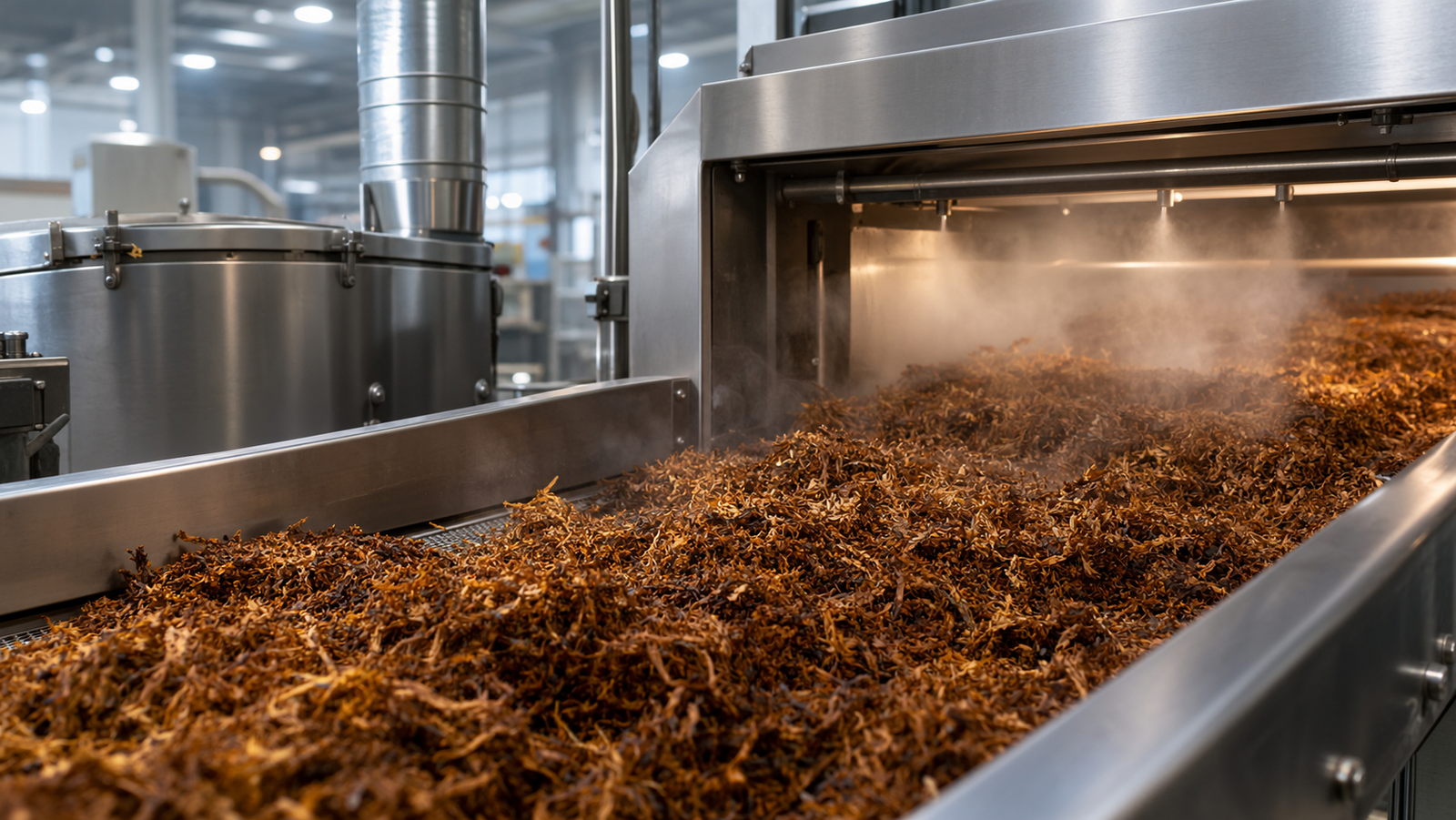
Before processing, stored tobacco leaf goes through a conditioning process to bring it to the correct moisture content for cutting. Conditioning involves passing the tobacco through a humidity chamber where steam or conditioned air is used to bring the moisture content of the leaf to the precise level required for the next processing stage.
Step 3: Tobacco Cutting
Conditioned tobacco leaf is fed into a cutting machine that cuts the leaf into the fine, consistent cut width required for cigarette production. The cut width of the tobacco affects the draw resistance and burn characteristics of the finished cigarette. Standard cut widths for cigarette tobacco are typically between 0.8mm and 1.0mm.
Step 4: Tobacco Blending and Drying
Cut tobacco from different leaf types is combined in the proportions specified by the blend recipe and thoroughly mixed to ensure consistent blend distribution throughout the entire batch. The blended cut tobacco then passes through a drying process to reduce moisture content to the precise level required for the cigarette making machine.
If flavoring agents are part of the blend recipe they are typically applied at the blending stage using a casing drum, a rotating cylinder that applies liquid flavoring evenly across the cut tobacco as it tumbles through.
Step 5: Cigarette Making
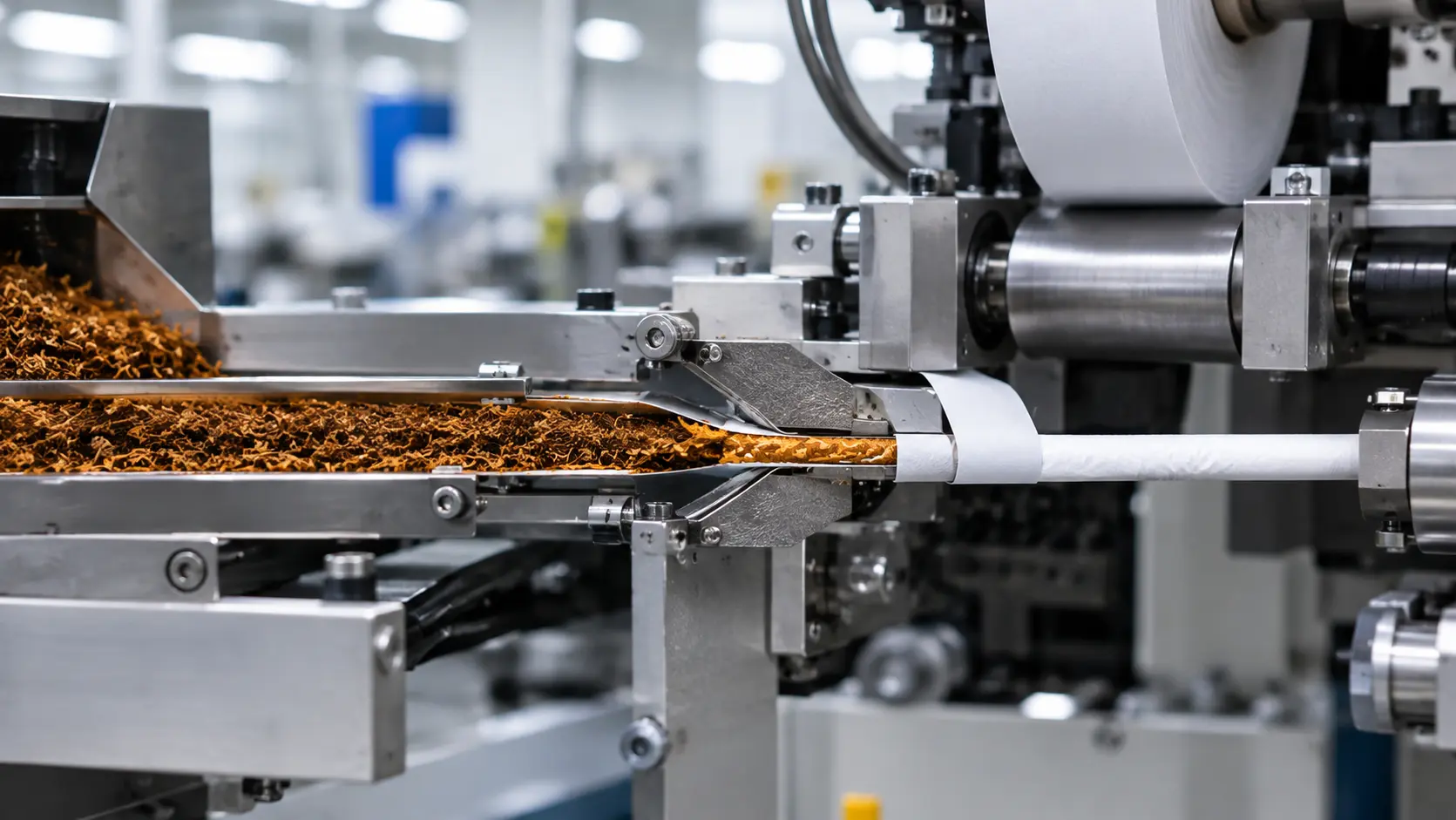
The blended, dried cut tobacco feeds into the cigarette making machine, one of the most sophisticated pieces of equipment in the manufacturing facility. At General Tobacco we operate MK-9 cigarette making machines, which are among the most widely used high-speed cigarette making machines in international manufacturing.
The cigarette making machine performs several operations simultaneously at very high speed:
The cut tobacco is metered out in a precise, consistent quantity and formed into a continuous tobacco rod.
The tobacco rod is wrapped in a continuous strip of cigarette paper that is fed from a paper bobbin and glued along its seam to form a sealed, continuous cigarette rod.
The continuous cigarette rod is cut into individual cigarette lengths at precisely timed intervals, producing individual tobacco rods at high speed.
The individual tobacco rods pass to the filter attachment section of the machine where pre-formed filter plugs are combined with the tobacco rods and wrapped in tipping paper to form the finished cigarette.
Modern high-speed cigarette making machines produce cigarettes at rates of several thousand cigarettes per minute, making them capable of producing millions of cigarettes in a single production shift.
Step 6: Quality Testing During Production
During production, samples of finished cigarettes are continuously tested against quality specifications. Quality checks during production typically include:
Weight check: each cigarette is weighed to confirm the tobacco fill weight is within specification. Cigarettes that are too light have insufficient tobacco fill. Cigarettes that are too heavy waste tobacco and may not draw correctly.
Draw resistance check: a sample of cigarettes is tested for draw resistance, which measures how easy or difficult it is to draw air through the cigarette. Draw resistance is a key component of the smoking experience and must be consistent across the entire production batch.
Circumference check: the diameter of finished cigarettes is measured to confirm they are within the specified tolerance. Cigarettes that are too wide will not fit correctly in the pack. Cigarettes that are too narrow may not deliver the correct smoking experience.
Seam integrity check: the glued seam of the cigarette paper is checked to confirm it is sealed correctly along the entire length of every cigarette.
Step 7: Cigarette Packing
Finished cigarettes from the making machine feed directly into the cigarette packing machine. At General Tobacco we operate HLP 2 packing machines, which handle the complete packing process from loose cigarettes to finished, wrapped packs ready for cartonning.
The packing machine performs the following operations:
Individual cigarettes are collated into groups of 20 and arranged in the correct configuration for the pack format being produced.
The collated cigarettes are wrapped in an inner foil liner that protects them from moisture and maintains freshness.
The foil-wrapped cigarette bundle is inserted into the pre-formed cigarette pack, either a Hard Pack box or a Soft Pack wrap depending on the format being produced.
The filled pack passes through a labeling station where the brand label is applied to the pack. For private label orders this is where the client’s brand name, logo and label design are applied to every pack.
The labeled pack passes through a cellophane overwrapping station where a tight-fitting cellophane wrapper is applied and sealed around the outside of the pack, including a tear tape for easy opening.
Step 8: Cartonning and Master Carton Packing
Finished, cellophane-wrapped cigarette packs are collated into cartons of 10 packs each. The cartons are closed and sealed and then packed into master cartons for bulk storage and export.
A standard cigarette master carton contains 500 packets packed into 50 outers, totaling 10,000 cigarettes per master carton. For international export from Pakistan, the standard minimum order quantity is 1,050 master cartons per shipment, loaded into a 40 foot High Cube Container.
Step 9: Final Quality Control and Inspection
Before master cartons are sealed and approved for export, a final quality control inspection is conducted. This includes:
Visual inspection of a sample of packs from the production batch for print quality, label placement accuracy and packaging integrity.
Pack integrity check confirming the cellophane wrap is correctly sealed and the tear tape is correctly positioned.
Carton weight verification confirming each carton contains the correct number of packs.
Health warning compliance check confirming the health warning text, size and placement on the pack meets the requirements of the destination market.
Only production batches that pass all final quality control checks are approved for packing into master cartons and released for export.
Step 10: Export Preparation and Documentation
Approved master cartons are prepared for international export. This stage involves:
Palletizing master cartons and wrapping pallets for container loading.
Preparing all export documentation including commercial invoice, packing list, certificate of origin, bill of lading and health certificate.
Coordinating container loading at the export facility and arranging customs clearance for the shipment.
For contract manufacturing clients this process is handled entirely by the manufacturing facility on the client’s behalf, with the finished product delivered to the client’s destination port or warehouse.
Hard Pack vs Soft Pack: What is the Difference
One of the most fundamental decisions in cigarette manufacturing is the pack format. The two primary options are Hard Pack and Soft Pack and the right choice depends entirely on the target market.
Hard Pack Cigarettes
Hard Pack cigarettes are housed in a rigid cardboard box with a hinged flip-top lid. The box protects the cigarettes from being crushed and maintains their shape during storage and use. Hard Pack is the dominant format in USA, Europe, most Middle Eastern markets and premium consumer segments globally.
Hard Pack styles available in international cigarette manufacturing include Round Corner, Bevel Edge, D-Type and Square. Each style has a slightly different box construction that gives the pack a distinctive profile on shelf.
Soft Pack Cigarettes
Soft Pack cigarettes are wrapped in a foil-lined paper wrap without a rigid outer box. Soft Pack is lighter, uses less packaging material and typically has a lower per-unit packaging cost than Hard Pack. Soft Pack is the dominant format across much of Africa, South Asia and price-sensitive consumer segments in Asia and the Middle East.
For brand owners targeting African markets in particular, Soft Pack is typically the required format for competitive retail positioning. A Hard Pack brand launched into a predominantly Soft Pack market will face a significant price disadvantage at retail.
Cigarette Sizes: What the Numbers Mean
Cigarettes are manufactured in several standard sizes, each defined by their length in millimeters and their diameter.
King Size 84mm
King Size 84mm is the most widely manufactured and consumed cigarette size globally. The 84mm measurement refers to the total length of the cigarette including the filter. King Size 84mm is the standard format in most international markets and is the safest choice for brand owners entering a new market for the first time.
King Size 100mm
King Size 100mm cigarettes are 16mm longer than standard King Size. They are popular in the USA, parts of Europe and some Middle Eastern premium segments. The longer format provides a longer smoking time and is associated with premium brand positioning in many markets.
Queen Size 72mm
Queen Size 72mm is a shorter cigarette format, 12mm shorter than standard King Size. It is available in some markets as a value-positioned alternative to King Size.
Super Slims 100mm
Super Slims are cigarettes with a significantly narrower diameter than standard cigarettes. They are 100mm in length and are associated with premium and female-oriented brand positioning in European and premium Asian markets.
Slims 100mm
Slims are similar to Super Slims but with a slightly larger diameter. They occupy a similar brand positioning niche to Super Slims across European and Asian markets.
Nano 84mm
Nano cigarettes have the narrowest diameter of any standard cigarette format. They are 84mm in length and are produced for specific niche premium market segments.
What is a Tobacco Blend
The tobacco blend is the combination of different tobacco leaf types used to produce a specific cigarette product. The blend determines the flavor, strength, aroma and burn characteristics of the finished cigarette.
Common Blend Types in International Cigarette Manufacturing
American Blend
American blend cigarettes combine Virginia, Burley and Oriental tobacco types. American blend is the dominant global cigarette blend style and forms the basis of most internationally recognized cigarette brands. American blend cigarettes have a rounded, full flavor that is familiar to smokers across all major markets.
Virginia Blend
Virginia blend cigarettes use primarily flue-cured Virginia tobacco with minimal or no Burley or Oriental components. Virginia blend produces a lighter, naturally sweet flavor with a clean burn. Virginia blend cigarettes are common in value and economy market segments.
Special Blend
Special blend is a manufacturer-defined blend formulation that combines tobacco types in proportions specific to that manufacturer’s product. Special blend cigarettes produced by General Tobacco use a proprietary blend recipe developed over decades of manufacturing experience.
Premium Special Blend
Premium Special Blend refers to a higher grade version of the manufacturer’s proprietary blend, using superior quality leaf selections to produce a more refined flavor and smoking experience.
From Manufacturing to Your Brand
Understanding how cigarettes are made is one thing. Understanding how that manufacturing process translates into your own branded cigarette product is the next step.
At General Tobacco the same manufacturing process described above produces cigarettes for international brand owners and distributors under four different service arrangements:
Private Label Manufacturing uses our existing blend and pack format with your brand name and label applied at the packing stage. It is the fastest route from brand concept to finished product on shelf.
OEM Manufacturing uses your proprietary blend recipe and your packaging design, produced through the same manufacturing process described above to your exact specification.
Contract Manufacturing applies the same process to a long term, high volume supply agreement with dedicated production capacity reserved for your brand.
Custom Cigarette Packaging uses our existing blend produced in your custom packaging design, applied at the packing stage of the process described above.
Frequently Asked Questions
How long does it take to manufacture cigarettes?
The actual machine production of cigarettes is extremely fast. High speed cigarette making machines produce several thousand cigarettes per minute. A full production run of 1,050 master cartons representing 10,500,000 cigarettes can be completed in a matter of days on a modern production line. The overall manufacturing timeline from order confirmation to export ready product is 4 to 8 weeks, which includes sample approval, full production, quality control and export preparation.
What is the difference between a cigarette making machine and a cigarette packing machine?
The cigarette making machine produces the finished cigarettes from cut tobacco, cigarette paper and filter components. The cigarette packing machine takes the finished cigarettes and packs them into branded packs, cartons and master cartons ready for export. In a modern cigarette manufacturing facility these two machines typically operate in a linked production line.
How many cigarettes are in a master carton?
A standard cigarette master carton contains 10,000 cigarettes, made up of 500 packets of 20 cigarettes packed into 50 outers of 10 packets each.
What is the difference between Virginia and American blend cigarettes?
Virginia blend cigarettes use primarily flue-cured Virginia tobacco and produce a lighter, naturally sweet flavor. American blend cigarettes combine Virginia tobacco with Burley and Oriental tobacco types to produce a fuller, more rounded flavor. American blend is the more widely consumed blend style globally.
What is a cigarette filter made of?
Standard cigarette filters are made from cellulose acetate tow, a fibrous synthetic material derived from wood pulp. The filter is formed by gathering and compressing the cellulose acetate fibers into a cylindrical plug that is then wrapped in filter paper.
What is the difference between Hard Pack and Soft Pack cigarettes?
Hard Pack cigarettes are housed in a rigid cardboard flip-top box that protects the cigarettes from being crushed. Soft Pack cigarettes are wrapped in a foil-lined paper wrap without a rigid outer box. Hard Pack dominates in USA, Europe and Middle Eastern markets. Soft Pack dominates in African and many Asian markets.
How are health warnings applied to cigarette packs?
Health warning text and imagery are printed directly onto the pack material during the packaging production process. The specific health warning text, size, placement and language requirements vary by destination market and are confirmed for each market before packaging production begins.
What is the minimum order quantity for cigarette manufacturing?
The standard minimum order quantity for cigarette manufacturing at General Tobacco is 1,050 master cartons in a 40 foot High Cube Container, representing 10,500,000 cigarettes per order.